
Duality
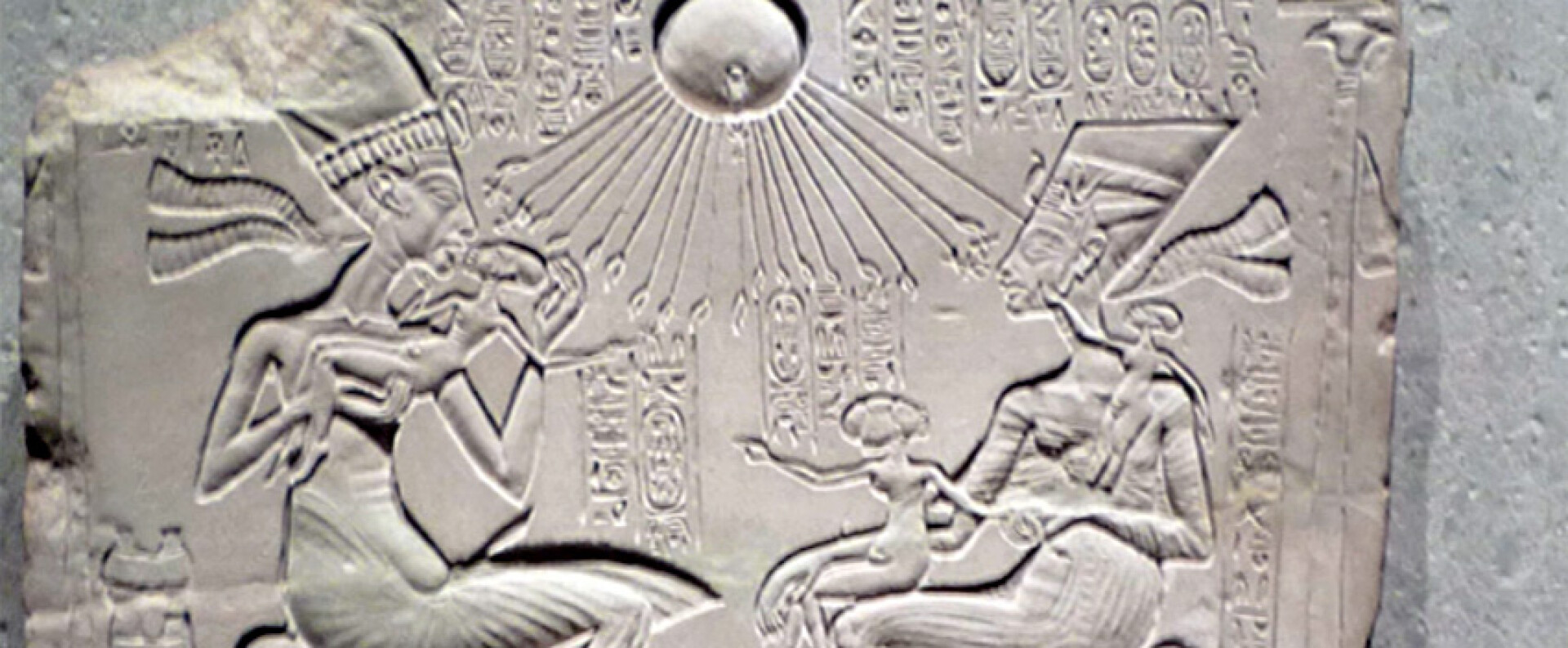
Duality
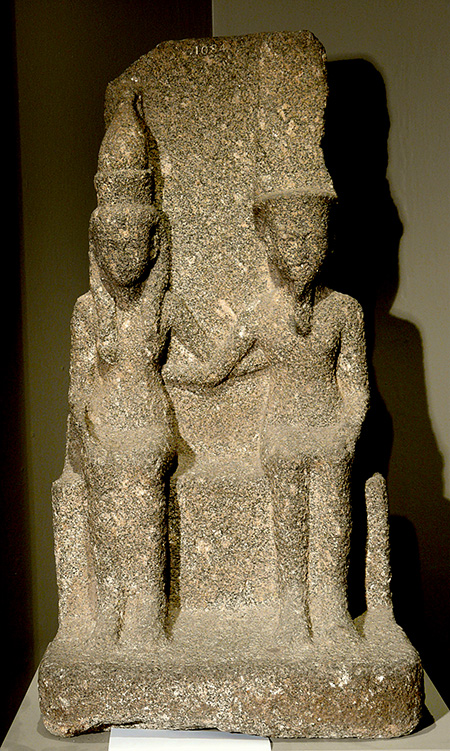
Sitting in the corner of the first room of the Egyptian Exhibition is a large granite statue of Tutankhamun and his wife Ankhesenamun. They are depicted sitting side by side, shoulder to shoulder, arms linked as equals, linked forever as they were once in life, making their way through their everyday family challenges as well as larger matters of state. It is a sculpture of two people and a marriage.
Egyptians viewed their universe as a complete duality of male and female. Giving balance and order to all things was the female deity Maat, the symbol of cosmic harmony, by whose rules the pharaoh was supposed to govern.
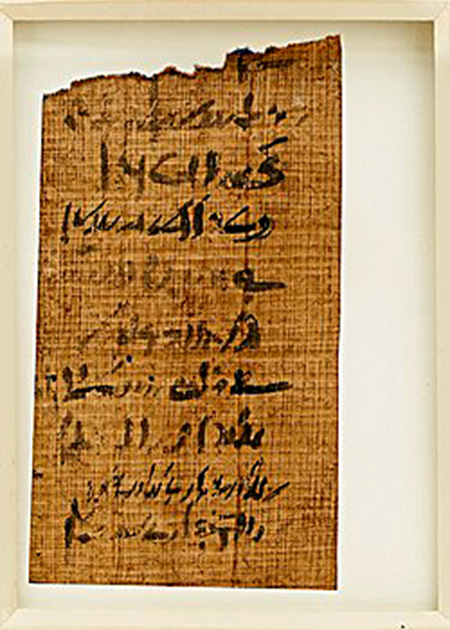
In everyday life, Egyptian women enjoyed a surprising degree of financial independence. Surviving accounts and contracts show that women received the same pay rations as men for undertaking the same job, something the UK has yet to achieve in the 21st century. There are records of royal women who controlled the treasury and owned their own estates and workshops, but non-royal women as independent citizens could also own their own property, buy and sell it, marry and divorce of their own volition and make wills.
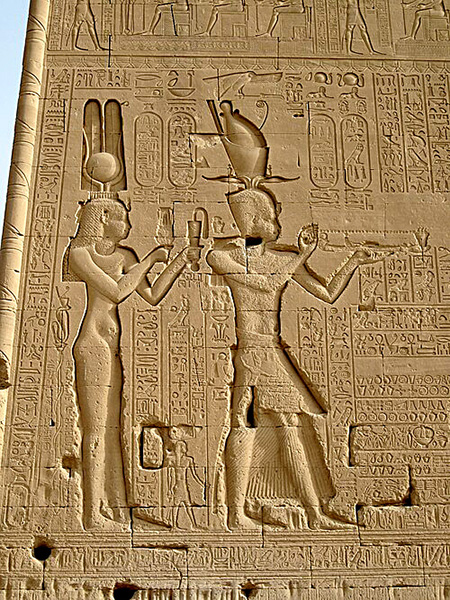
Royal women undertook military campaigns whilst others were decorated for their active role in conflict. Women were regarded as sufficiently threatening to be listed as 'enemies of the state', and female graves containing weapons are found throughout the three millennia of Egyptian history. Perhaps one of the most famous examples was Cleopatra VII, the last active ruler of Ptolemaic Egypt, known for her intelligence, political alliances with Rome (Julius Caesar and Mark Antony), and her efforts to maintain Egypt's independence. A brilliant linguist, Cleopatra VII endowed the Great Library at Alexandria, the intellectual capital of the ancient world where female lecturers are known to have participated alongside their male colleagues.
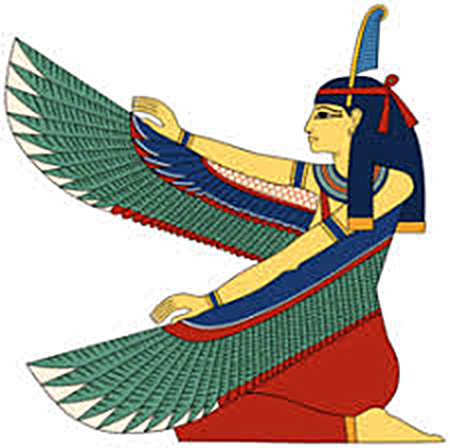
Women were overseers, governors and judges. Two women are known to have achieved the rank of vizier (prime minister) and a common 'career' for women was in the priesthood. This is not to overlook their role as 'Lady of the House' which involved running the home and bearing children, listening to music, eating good food and drinking fine wine.
Neighbouring countries were clearly shocked by the relative freedom of Egyptian women, describing how they 'attended market and took part in trading whereas men sat and home and did the weaving'. The Greek historian Herodotus wrote that Egyptians 'have reversed the ordinary practices of mankind' – clearly not a supporter of Women’s Lib.
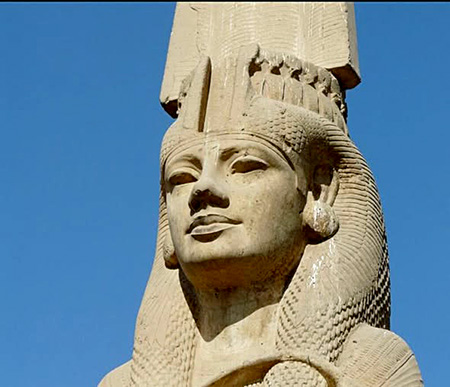
This freedom seems to have been the case from the very beginning of the Egyptian civilisation. Early records suggest that Merneithh of 1st Dynasty was one of the earliest known female pharaohs, potentially acting as a regent or ruler 5,000 years ago, demonstrating early female authority in the Old Kingdom.
Ni-Maat-Heb, mother of Djoser (best known as the builder of the step pyramid at Saqqara), is likely to have been a Pharaoh in her own right. Sobekneferu (12th Dynasty) adopted the full royal title of Pharaoh, ruling after her brother's death but broke tradition by ruling as a king. An interesting puzzle to resolve towards the end of the Amarna Period is who was the 18th Dynasty pharaoh Neferneferuaten. There is one theory that she may have been Nefertiti taking on the mantle of leadership after her husband Akhenaten’s death.
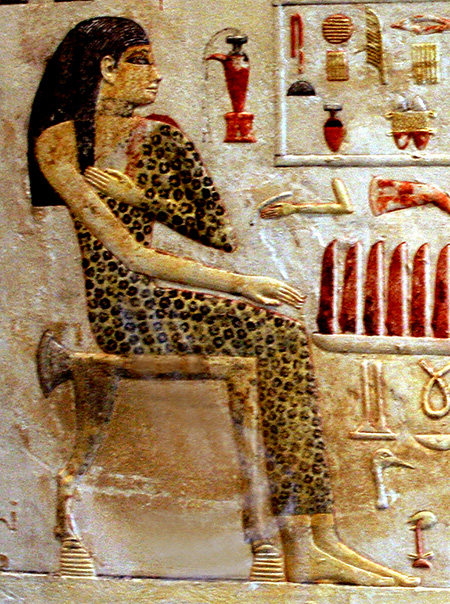
Arguably the most famous female Pharaoh was Hatshepsut (18th Dynasty). She ruled for nearly two decades, establishing major trade routes including funding a mission to the Land of Punt from whence her delegation returned with myrrh trees and other luxuries such as frankincense.
Hatshepsut was one of the most prolific builders in Ancient Egypt, commissioning hundreds of construction projects throughout upper and lower Egypt, creating temples, monuments and obelisks. Today we all gaze in awe at her temple at Deir el-Bahari but she has been labelled as the pharaoh most accomplished at promoting her own accomplishments which is not really a compliment.
Only in the last 50 to 100 years have women once more had the legal right to contract, to hold money and property, to have rights over their children, become priests but even now it is only in some parts of the world.

37 Comments
This is the most interesting bit of Egyptian history I did not know!! Thank you Lady Carnarvon for helping me to keep learning.
I just found it so interesting!
It is amazing how far forward ancient civilizations were and how far we have currently regressed. Thank you for highlighting this !
So true.
Excellent! Thank you so much for your blog. It’s always enlightening.
Absolutely fascinating! Thank you.
A most interesting read on the place of
women in the Egyptian workplace all that time agop
It was rather enlightened .. or perhaps just fair ..
This was food for thought. Thank you very much. I have studied at the primary and secondary school the egyptian but I have never known the conditions of the women in that culture. We should learn and take example from them. Thank you very much for shaink your knowledge.
Dear Lady Carnarvon:
Thank you for this Monday's very informative blog.
At this very moment, the entire world is at the same crossroads. It will be interesting to see what will be allowed to progress and what will cause a regression.
Until next time, I wish you all the best.
Perpetua Crawford
Fascinating reading, thank you. As I grow older, I have come to realise that every day is a school day and I learn something new every day!
Thank you again for expanding my knowledge of how advanced Egypt was in its duality. Another most fascinating read.
Thanks for the history lesson.
Dear Lady Carnarvon,
Thank you for your very interesting column today. I did not know this!
Best regards,
Roberta Fox
Chicago
dear Lady Carnarvon..once again thank you for another fascinating glimpse of historical knowledge ..so much to learn ..todays note from you hits me as very reaffirming and good to know that at different ages and stages mankind has really accepted the natural equality that should lead to more peaceful and civilized times for all
ccheers the day ..randi roe
So very interesting thank you
My favorite pharaoh is Hatshepsut. She called herself "His Majesty Herself," and wore a false beard. She said she was the daughter of a pharaoh and the wife of a pharaoh. Unfortunately Tutmose the third tried to erase her from history.
She may have been “The Mother of Women Who Want to Matter”. She did a good job setting an example!
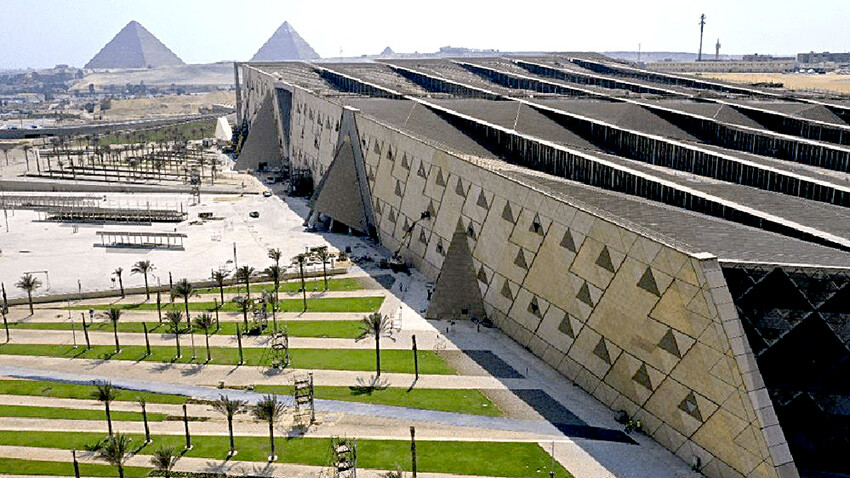
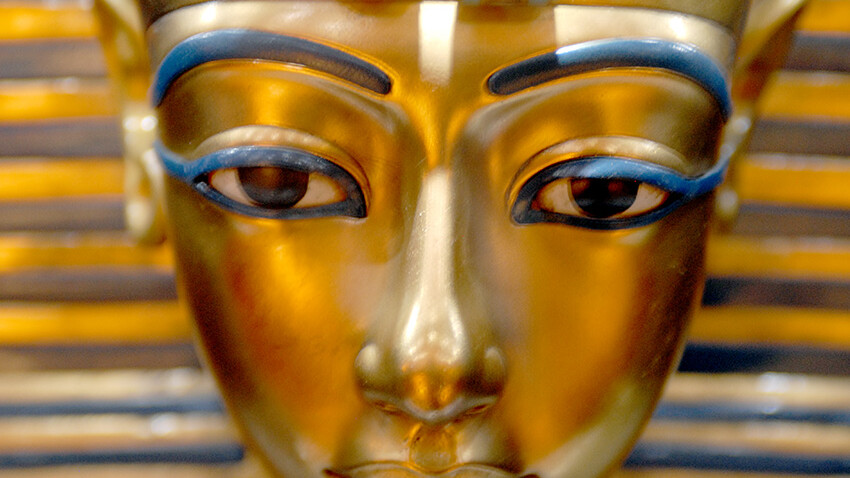
Having visited Highclere's Egyptian collection last September at the Downton Abby Grande Finalee soiré, I was interested to see large coffin of Tutankhamun and wondered if you had it recreated by artisans in Egypt? I was grateful for the opportunity to take two weeks to visit Egypt in 2024 and see the Tutankhamun exhibition when it was still in the Old Egyptian Museum. Even though it has now moved to the GEM, it was a pleasure to see the original museum knowing that Lord Carnarvon would have walked the halls and stairs of that museum.
It was recreated some time ago and we bought it from Cornwall!!! The story is most extraordinary and one I shared in A Year at Highclere - you wont believe it !
Sooooo very interesting g! Thank u!
A wonderful article!! Thank you for sharing so much with us. You help bring history alive again!
Lady Carnarvon,
Every Monday is a treat - and today is no exception! Today’s information inspires women to continue to uphold their rights. If Egyptian female pharoahs could rise to exceptional power, we can mimic their achievements! Thank you once again.
I completely agree
Thank you for the wonderful down to earth lesson about how cyclic history is and how we are but cogs in the wheel of the world's story. People lived and loved creatively and caringly, sometimes even better, before us and will do the same into the future.
Thank you again for painting such a beautiful portrait celebrating the strength and capabilities of such incredible women from history. I took an interest in Egyptian history as a kid.
Thank you, Lady Carnarvon, for your research and sharing this bit of history is such a concise format. It entices me to research it further. You've captured this lady's interest.
~ Anna ~
You are very kind
This is absolutely fascinating and thank you for bringing this subject to us today.
As others have said here, I too want to find out more about this race of people as a result of reading this!
Wow...loved reading this and I want to show this info to all 6 of my granddaughters...Go Girls!!!
Am I mistaken in thinking that the major estates in the UK can only be inherited by the male line and that what happened in your husbands estate when it was named Downton Abbey, in the tv series, Mary was missed as the heir because she’s was female and a male cousin inherited the estate.
Maybe it would help all UK females is this rule enacted in the 1700 I think, was reversed.
Also, I believe that a large percentage of the entire wealth on the estate is kept by the male line and only 10% distributed to the any of the female's in the line of inheritance.
I am not a scholar but I am a feminist and I tested in history being told from all sides. Let’s see British aristocracy follow the lead of the Egyptians and then we will see real change. Thank you, I enjoy your words.
It is all a little different today and women play a large part in many estates
Thank you for another enlightening blog on ancient Egypt and their female pharaohs. The Egyptians seem to have respected women as leaders more in ancient times than today. I was especially interested in Hapshutset's leadership and what she accomplished as we toured the Valley of the Queens and Luxor Temple with Viking. Is the sculpture of King Tutankhamun and his wife the original artifact or a replica. It is quite a wonderful and rare piece of them together!
A fantastic insight into how great women can be and were in ancient times and that if we look back to what great things have been achieved by us. It is true if we all work together as equals what great things can be achieved.
A very interesting read indeed.
Thank you.
Thanks for caring by sharing as always. I as you know had the opportunity to visit all the places u mentioned in this article that were in Egypt, the exception is the ‘land of Punt’ (now known as Eritrea). I look forward to studying the eastern horn (mainly Eritrea, Sudan And Ethiopia) more eventually. Great Britain as well! Until then…….
-Hannibal-
Thank you for this article. I am fascinated by ancient history and Egyptian history in particular. We visited King Tutankhamen’s tomb in March 2020, and we have tickets to view your Egyptian exhibition in August! I simply cannot wait.
Leave a Comment
- Christmas
- Community
- Dogs & Horses
- Egypt & Tutankhamun
- Entertaining
- Farm
- Filming
- Gardens
- History & Heritage
- Daily Life
- Royalty
- Cooking
- Interiors
- Heroes
- Architecture
- Cars
- Conservation
- Downton Abbey
- Events
- Gardens & Landscape
- Highclere Castle Gin
- History
- Planes
- Restoration
- Stories & Books
- Uncategorized
- Visitors
- Wildlife
Lovely the pictures of Duality and did you and lord Carnarvon have a wonderful weekend and lamfanof Downton abbey highcelere castle