
May 3rd 1791
May 3rd 1791
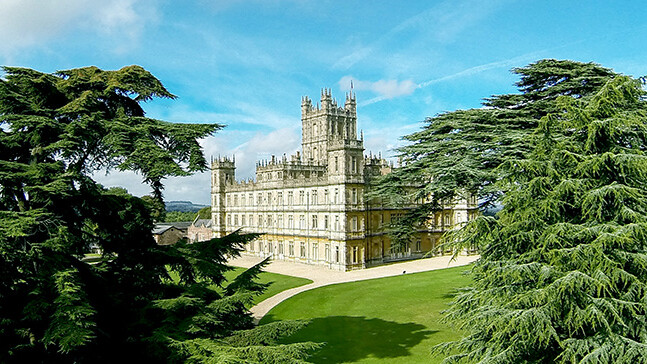
There were so many reasons we all enjoyed Downton Abbey from the characters, the location (obviously) and the witty lines which in some cases have become part of our everyday language. At one point Mr Carson commended us to travel in hope which is excellent advice on every count. It is always better to be a glass half full.
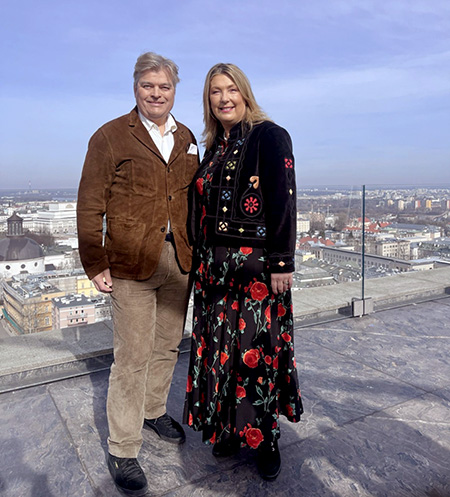
Six weeks ago, Geordie and I travelled to Warsaw in Poland. Through a mutual friend I had been asked to give a talk about the value of heritage and historical perspective. The wife of the President of Poland opened the conference, and I then rather nervously stepped on stage to begin with a few words in Polish.
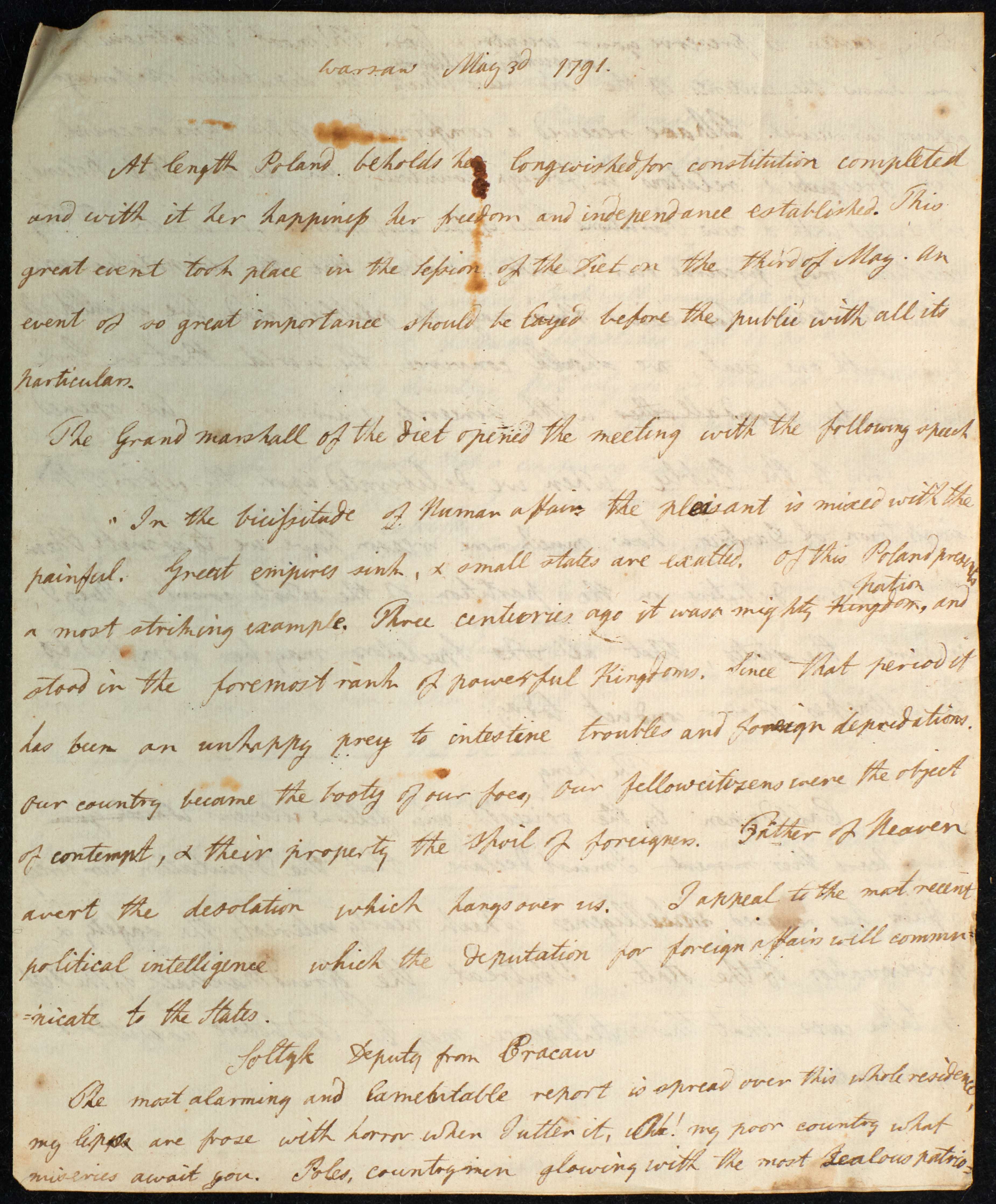
I had in fact written about Poland before going, but being there, meeting people, walking through the streets, palaces and museums, eating local food is just so different. I had asked David our archivist to see if he could find any references to Poland in our records not expecting much but, to my surprise, he found a 10-page account from Warsaw written by the 2nd Earl of Carnarvon recounting the events and feelings of 3rd May 1791.
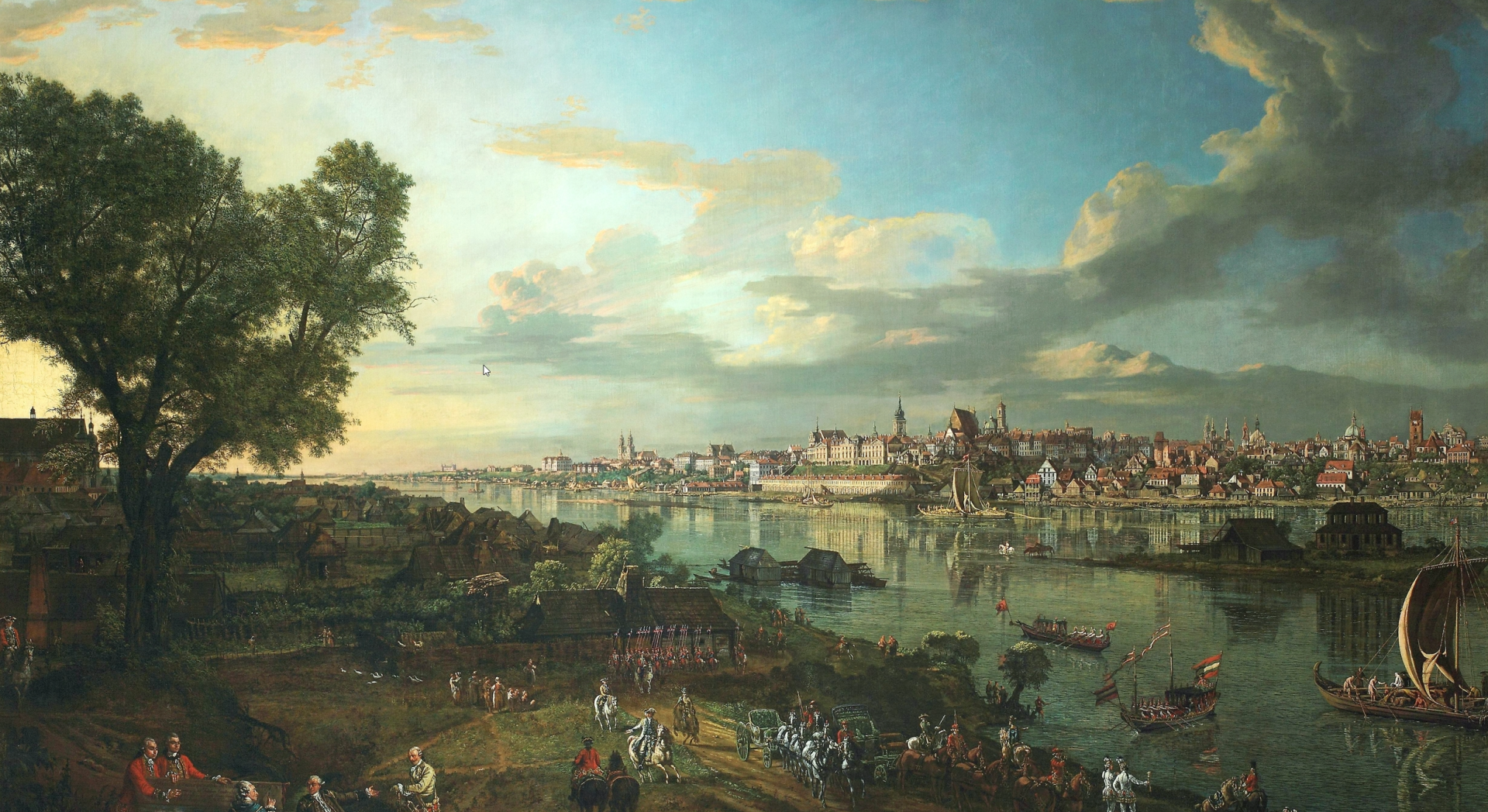
This particular period was a time of turbulence in ideas and politics and both the American Wars of Independence and the French revolution had given hope to many that they could share and influence how they lived. At that time Warsaw was one the of the most beautiful cities in Europe, the “Paris of the East” and painted by Bernardo Bellotto, (known as Canaletto), in over 20 extremely detailed, fabulous paintings. He was a Venetian painter who served as court painter to the Polish King Stanisław August Poniatowski from 1767 until his death in 1780.
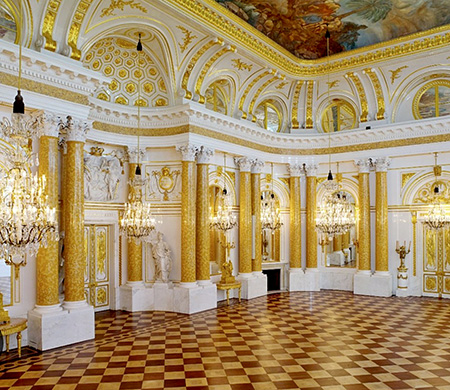
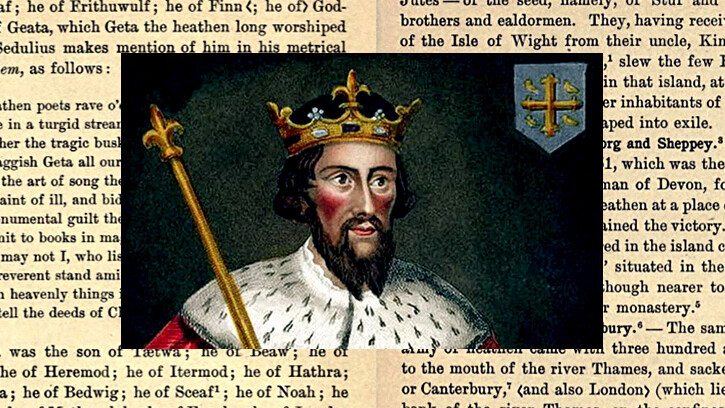
At a time when kings ruled almost alone in most of Europe, Polish reformers and the king worked together to create a law that shared power and protected citizens’ rights. It was the first modern constitution in Europe and the second in the world.
Geographically, Poland lay to the east of the many German princely states of that time and to the west of the Russia of Catherine the Great. The 1791 Constitution was a response to the increasingly perilous situation in the Polish Lithuanian Commonwealth. Once a major European power, it was still the largest state on the continent. King Stanisław August Poniatowski was the principal author of the constitution and, it was recognised by political scientists as a remarkably progressive document for its time, reflecting the vision of the 18th century Enlightenment.
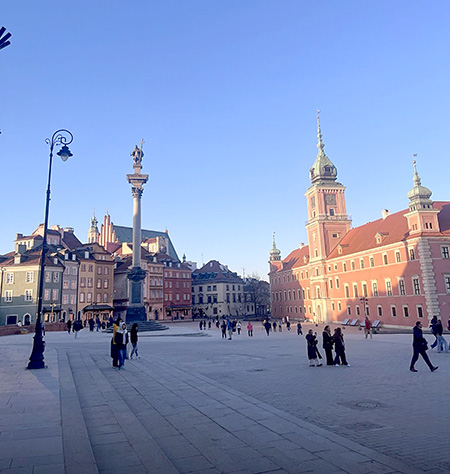
One of the things it included was Rousseau’s concept of the social retract. With the philosopher John Locke, Rousseau argued that each of us acquires civil rights when we accept the obligation to respect and protect the rights of others. We therefore have to relinquish certain personal freedoms in the process. Law and political order are human creations and the political order they create are a means towards an end for the benefit of the individuals involved.
The other key theme at this time was Montesquieu’s advocacy of a balance of power between three branches of government: legislative, executive, and judicial, and of a bicameral legislature.
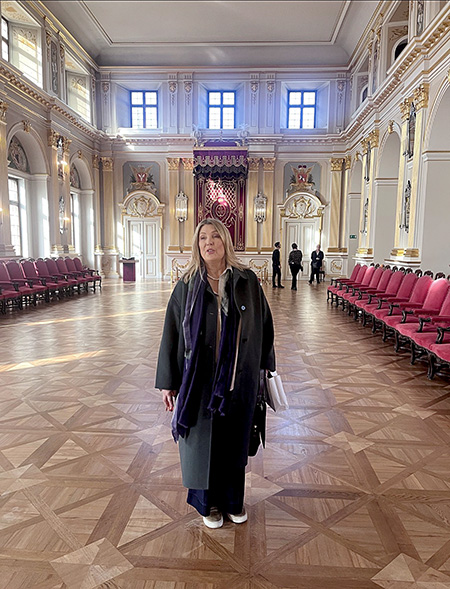
Sadly, the Republic failed after two years, and the once expansive and successful kingdom of Poland became caught between the growing Empires on all its borders. Its weakness meant that the Polish commonwealth was partitioned several times.
The Impact of World War Two on Warsaw was beyond words with buildings razed to their foundations, a vast loss of life and the destruction of much of its heritage. Some of the past city has been painstakingly rebuilt using the Canaletto paintings as a guide to what the city once looked like. Standing in Warsaw giving my talk, it was rather extraordinary to think that Geordie’s ancestor was once here as well, standing on the same spot.
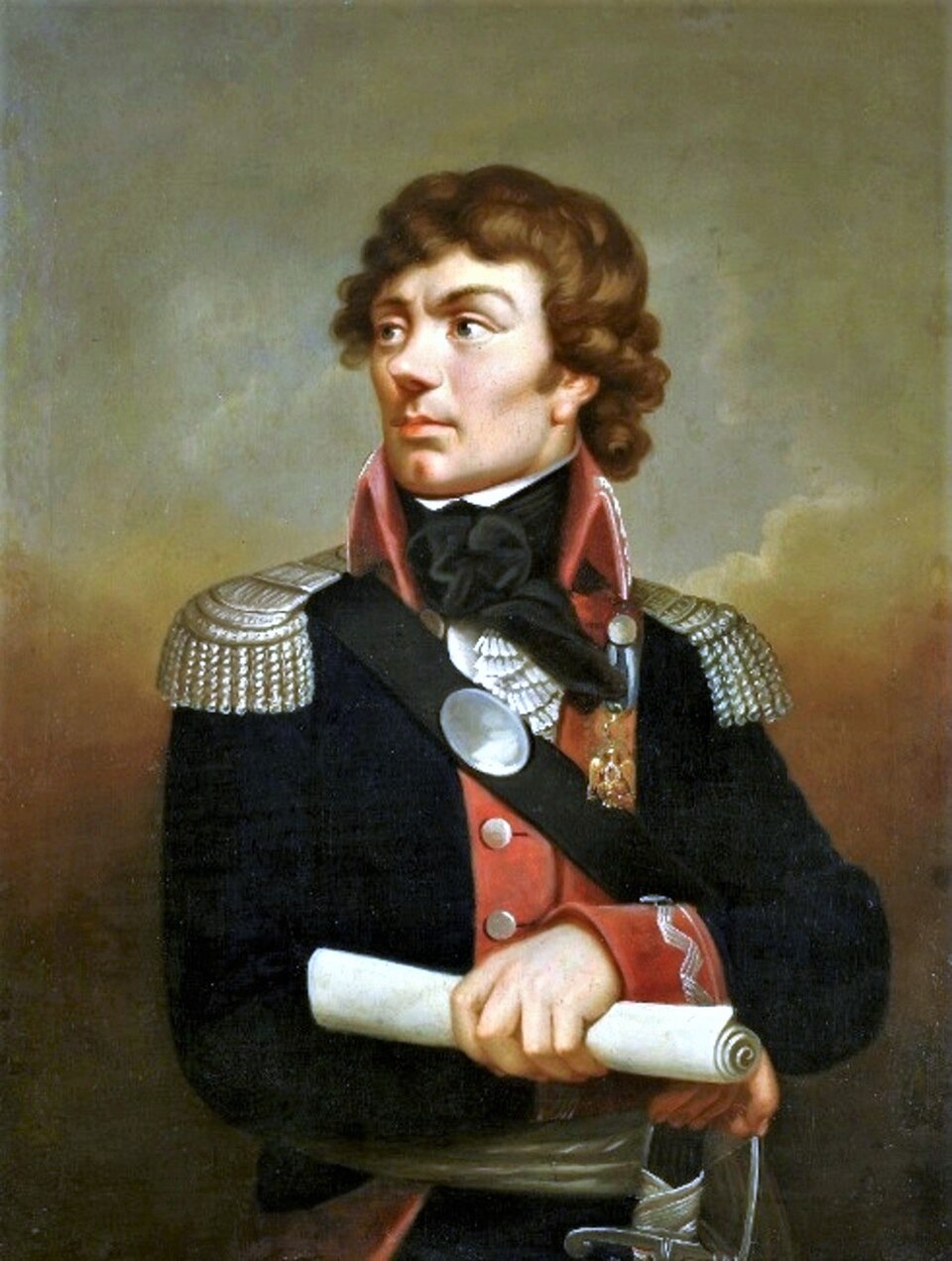
The Highclere archives also have a letter from a famous Polish General Tadeusz Kościuszko (1746–1817), a great military engineer and national hero both in Poland and Lithuania. However, he began his career in the USA where he designed fortifications for West Point, New York. He was promoted to brigadier general in the U.S. Army in 1783 so he is a USA hero too. I am not sure we know how lucky we are in this country to retain archives, letters and diairies, touching the letters written 250 years ago and to read and thus hear the voices of our predecessors.
43 Comments
What a wonderful story! How lucky we are to have someone who love to discover the past and recount us about it sharing her thoughts and reflections. Thank you very much.
Thank you once again my dear Lady Carnarvon!
That was another fascinating & thought-provoking
blog - have a wonderful Bank Holiday weekend,
love Caroline
Dear Lady Carnarvon,
My name is Ksenia, I'm from Poland.
I would like to emphasize how genuinely
I appreciate Your contribution to popularizing
knowledge about the History of Poland, our culture and Values
precious to the Polish Nation.
Thank You for this interesting, elaborated and
~polished~ post.
I hope to visit Your magnificent Castle someday.
Wszystkiego dobrego!
You are very kind - I found everyone focused, engaged and aware. Plus I had a great time at an amazing concert followed by a bar!
Thank you for inspiration this Monday morning. The reminders of higher ideals are sorely needed.
I have been very lucky to have visited Poland. A beautiful country. I absolutely loved it. Beautiful flowers everywhere and lots of history.
Very grateful to read your posts and particularly your piece on Warsaw. Through historical reading I lamented the loss of Warsaw and read a lengthy historical fiction book covering centuries of Polish events. Also grateful for the archives of Highclere and your sharing them through your blog.
There is more in the archives - it is just time I am short of
I have been very lucky to have visited Poland. A beautiful country. I absolutely loved it. Beautiful flowers everywhere and lots of history.
I love your columns. This one about Poland is awesome in its history and knowledge. I live in the U.S.A and I do not remember learning of this history. I really enjoyed Downton Abby.
Keep writing.
Have a tail wagging day,
Patricia S Romito
Their hero is your hero and will be honoured this year by you
Lovely the pictures of may 1791 and did you and lord Carnarvon have nice long bank holiday weekend and lam fan of Downton Abbey and highcelere castle
What a marvelous article! My understanding of eastern Europe begins in the early 20th century, I'm sorry to say. This article expanded my knowledge and reaffirmed my sorrow at the tragic loss of life and treasure of the Polish people.
I think I forget the utter loss of archives - of memories that validate our lives
“each of us acquires civil rights when we accept the obligation to respect and protect the rights of others.
We therefore have to relinquish certain personal freedoms in the process.” Bravo!
If each of us lived by this idea; what a better world this would be.
Thank you for sharing these thoughts and for a glimpse into the history of Poland 🇵🇱
A bit more balance would help
This was so interesting. Thank you for your excellent research.
Wonderful read. Thank you.
Wow! Terrific piece with relevance to the current situation on Poland's Western border. I am forwarding it to a Polish friend whose family left
during and after World War2
I enjoyed so very much reading about your visit and discovery of family connection to historical Poland. I had to go directly to your website in order to read it today. When I clicked on the Read More in your Monday Lady Carnarvon Blog, my computer screen popped up notice that messages using fitzfeed ? are not secure today. It refused me access to your Blog. I am happy that I was able to read the Blog by typing in your website address. Nancy Meisner Port St. Lucie, FL USA
Fascinating! Thank you for sharing!
Thank you! What beautiful scenery
I looked at the painting before reading the blog and thought "that's Canaletto" but he painted Venice, then upon reading I discover he was the court painter to King S
tanislaw. Thankyou so much for your very interesting and informative article.
Thank you, Lady Carnarvon.
This was so interesting and I am very grateful to read this post.
Excellent post! My Polish ancestors and I applaud you.
You have inspired me to learn more about the histories of other European countries.
Here in the USA, we, of course, learn our history, and some of England's, France's, and Italy's.
So much to learn, so little time!
Thank you, Lady Carnarvon, for enlightening my Monday.
It is important to embrace the history of other cultures.
Polish General Tadeusz Kościuszko (1746–1817) How proud I am to learn about this talented General who designed the fortifications at West Point, NY. Indeed, an American hero. My husband is former a U.S. Army Officer. We dreamed of making a visit to West Point, NY. It is perched on a promontory above the Hudson River, a most commanding position for warfare defense. I'm also proud of my Polish heritage, even moreso after reading your blog post. Thank you for sharing the historical artifacts from your family's archives. We are all connected by virtue of our humanity.
Australia’s highest mountain is Mt Kościuszko, named after Tadeusz in 1840, by the Polish explorer Pawel Strzelecki who also has a mountain range named after him in my home state of Victoria
Thank you so much for this beautiful post about Poland. There is a long standing connection between Poland and UK. My grandfather fought in the II World War under polish general Anders along British army.
I am so glad to hear you had a good time visiting Poland.
Warmly,
Edyta
We had a great time ....
Thank you so much for this beautiful post about Poland. There is a long standing connection between Poland and UK. My grandfather fought in the II World War under polish general Anders along British army.
I am so glad to hear you had a good time visiting Poland.
Warmly,
Edyta
Thank for such an interesting article. General Kosciusko also has a place in Australia. Our tallest mountain (2,228 metres) is named after him. It was given this name by Polish explorer Paul Strzelecki in 1840.
Thank you for relating that!
Thank you another very interesting read ,
Lady Carnarvon,
I remain amazed at the depth of your articles. I read this one a day late (computer). The painting highlighting the article is one of the loveliest in my list of favorites. I thought perhaps the blog was about the painting, but was mesmerized at the history lesson instead! Poland has remained an historic jewel in European history, and the story you tell is so helpful. I wish I could have heard your presentation!
Many warn regards,
Marhta
Thank you for sharing your archives with us, as always your contributions are interesting and the photos illustrate your comments well. Have a good day to you and your team.
Merci de partager vos archives avec nous, comme toujours vos interventions sont intéressantes et les photos illustrent bien vos commentaires. Bonne journée à vous et votre équipe.
What a wonderful blog, as usual , Lady Carnarvon.
Thank you for the lovely blog which as usual, is beautifully written.
I truly enjoy reading your blogs. You are an inspiration, I don't think I could stand Infront of people and speak. I get tongue tied, lol!!!
One day I'll be able to visit the amazing beautiful places over the great big pond. :o)
I am American/Mexican, I didn't appreciate history and culture...I do now.
Thank you, Lady Carnarvon
Have a great, safe day
Lilly A.
General Tadeusz Kościuszko has more than one monument in New York City to honor his service to the fledgling USA, including a bridge named for him.
Dear Lady Carnarvon;
I am still behind in reading your weekly Blog.
Thank you for this Monday's well-researched and brief, complicated history of Poland.
As I recall, this may have been your second visit to the country. I believe that you spoke at a Women's Conference earlier on.
I am glad that you and Lord Carnarvon had a pleasant stay, and that you were able to learn more about the customs, culture, and foods of Poland. Perhaps you will have the opportunity to visit again sometime in the future.
On a side note, when the United States was celebrating its Bicentennial in 1976, the citizens of Poland gifted a statute of Brigadier General Tadeusz Kosciuszko to the City of Detroit. It was a symbol of the two countries' struggles for freedom. The statute may be found at the corner of Michigan Avenue and Third Street in the area of Lafayette Park.
Perpetua Crawford
Leave a Comment
- Christmas
- Community
- Dogs & Horses
- Egypt & Tutankhamun
- Entertaining
- Farm
- Filming
- Gardens
- History & Heritage
- Daily Life
- Royalty
- Cooking
- Interiors
- Heroes
- Architecture
- Cars
- Conservation
- Downton Abbey
- Events
- Gardens & Landscape
- Highclere Castle Gin
- History
- Planes
- Restoration
- Stories & Books
- Uncategorized
- Visitors
- Wildlife
European Historian needs to be added to your long list of talents. This was wildly interesting. Thanks for all your hard work researching this and presenting the material is such a fascinating manner. (Now I want to visit Poland.)
Do visit - any ideas of what not to miss - let me know