
The Barn Owl
The Barn Owl
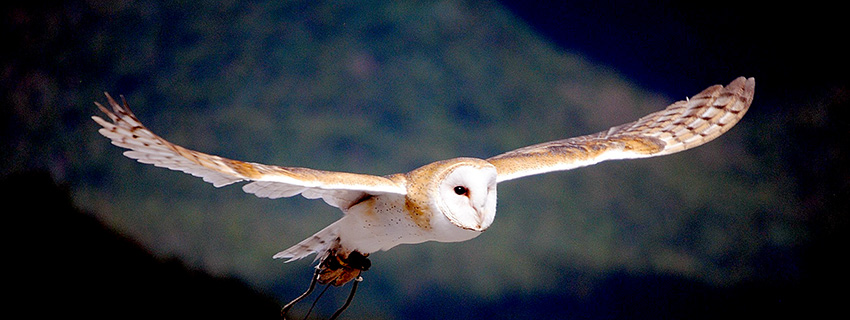
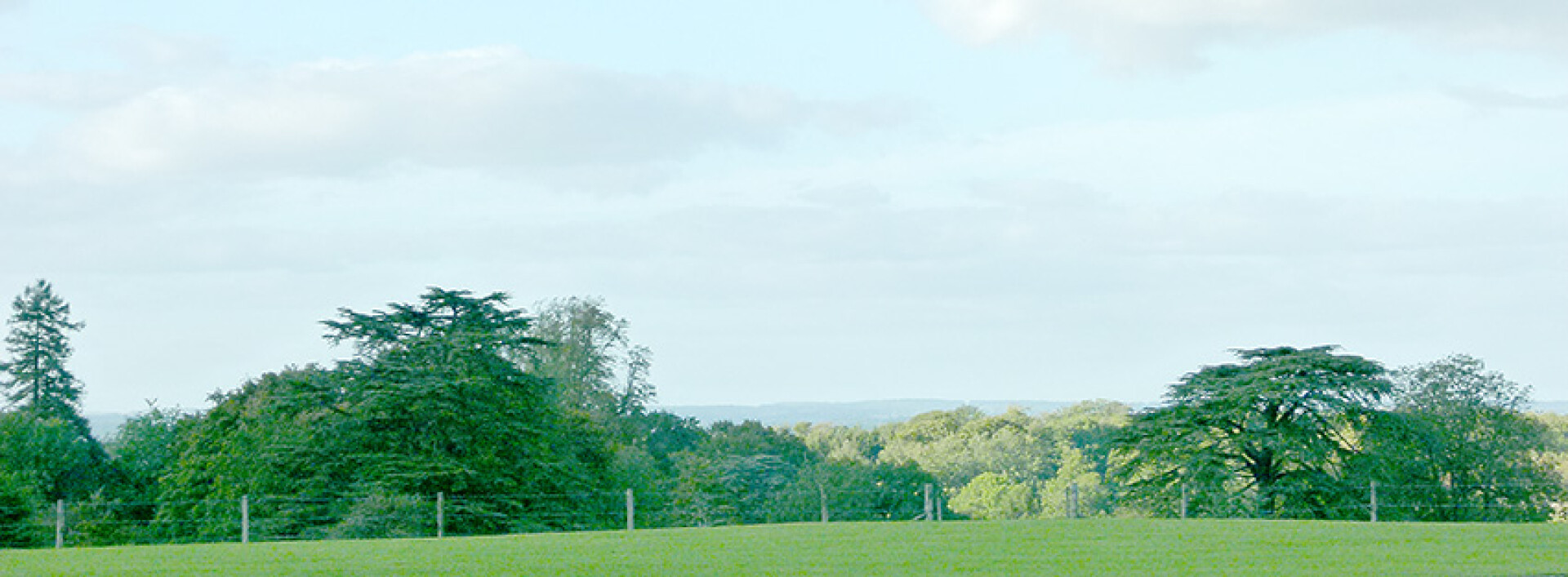
Driving back through the park in the late evening, the car headlights often catch the pale heart shaped face of a barn owl perched on a particular fence post. Barn owls are masters of nocturnal hunting, perfectly evolved for silent flight and possessing outstanding night vision. They are well adapted to live alongside humans using spaces in barns or churches as they do not build their own nests. They are invaluable to farmers, eating over 1,000 rodents yearly. They swallow their prey whole and regurgitate the fur and bones as pellets.
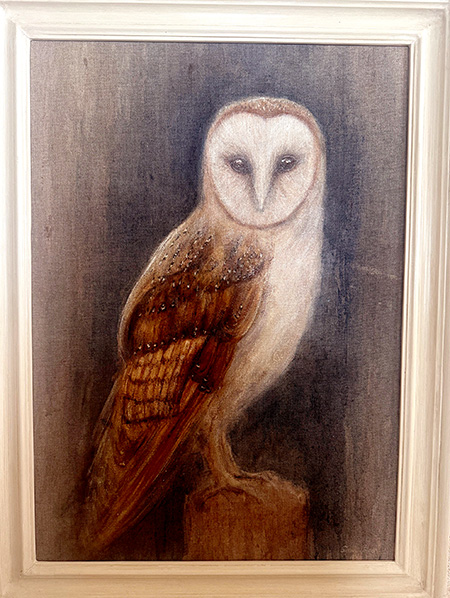
Like many other animal populations, barn owls are vulnerable. In this country, they are protected but currently are not on the endangered list, but it is worth noting that between 1970 and 2020 global wildlife populations declined by 73%. Around Highclere, there are many buildings with nooks and crannies which make appropriate nesting sites, but we have also installed boxes for them, so they have options. Sealed houses are neither healthy for us nor for them. (The painting is by Sarah Elder - renowned wildlife artist)
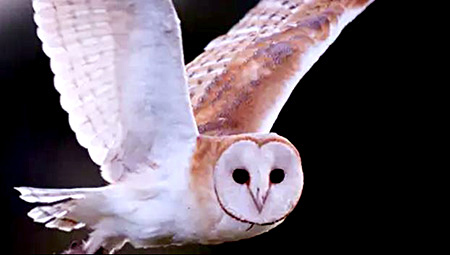
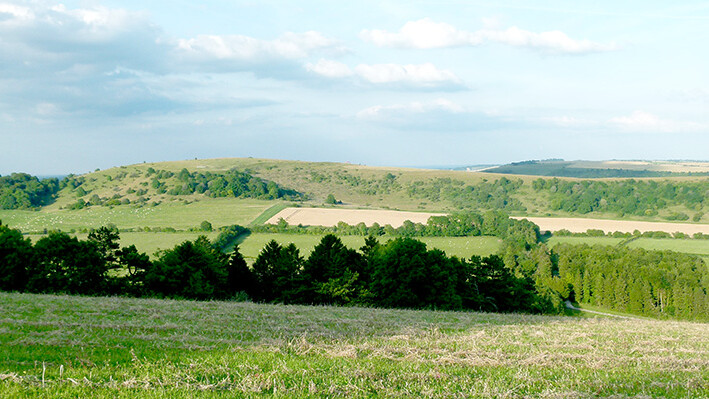
Walking out with the dogs in the half-light of the early evening, I often hear them screech and catch a glimpse as they circle over the grassy fields studded with trees looking for voles, mice, shrews and rats. With their wide wings barn owls can glide slowly whilst their fringed, soft, velvet-like feathers both dampen sound whilst their serrated leading edges break up air turbulence. The fringed trailing edges also reduce stall speed. Conversely these feathers are not highly waterproof, which limits their hunting ability in heavy rain.
Their eyes are very large for their size offering low light vision and they can turn their head through three quarters of a circle. Their exceptional directional hearing means that they can pick up the slightest noise. This is because their ears are placed asymmetrically, one higher than the other, which means that every sound is heard separately and differently which helps the owl’s brain work out the exact position of the sound source.
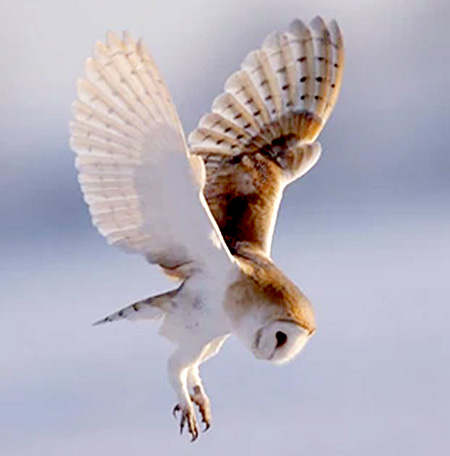
When it dives down to pounce, the force is approximately 15 times its own body weight which is far higher than many other birds. One analogy is that it is the equivalent to an 80 kg human being hit by the entire weight of a 12-tonne truck. Its strong legs are great for plucking prey from the undergrowth whilst powerful talons mean that prey rarely escapes.
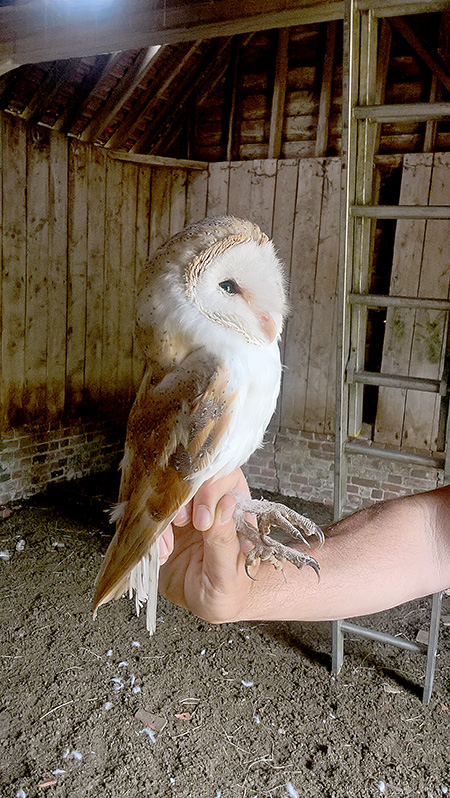
Barns owls are a mosaic of brown tinted feathers, the same sort of colour as the rough fields over which they fly. Viewed from below they have distinct white faces, and their bellies are pale coloured as well. This may well reduce the aspect of being a dark ghostly spectre – it is an ante-silhouette strategy.
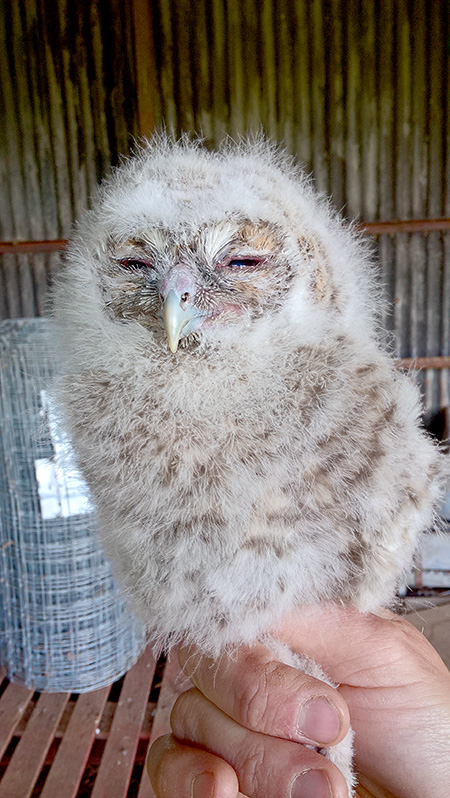
Throughout history and across many cultures, owls have been regarded with both fascination and awe. However, we also have different and contradictory beliefs about these unique birds. Owls have been both feared and admired: most cultures consider them wise, but they are also associated with witchcraft and medicine and in England - of course – they are associated with the weather.
The Little Owl (Athene noctua) is Athena's sacred companion, representing wisdom, strategy, and scholarship, leading to the phrase "wise as an owl” and we all believed that a magical "inner light" gave Owls their night vision.
Folklore surrounding the Barn Owl is better recorded than for most other Owls. It was often considered a harbinger of change, both good and ill. Their eerie calls in the night led to their association with ghosts and spirits. However, they were also seen as symbols of protection, believed to keep evil spirits away from farms and villages.
There was an Owl liv’d in an oak
The more he heard, the less he spoke
The less he spoke, the more he heard
O, if men were all like that wise bird.
42 Comments
Lovely the pictures of the barn owl and did you and lord Carnarvon have a wonderful weekend and lam fan of Downton Abbey and highcelere castle
Yes we did, thank you, it was very busy here but wonderful to see the sunshine for so long
Thank you for the informative and beautifully
written column, as always.
I believe that in 17th century Netherlands, owls were less highly regarded, considered to be symbol of insanity and over-indulgence in alcohol. Not sure why they got such a bad reputation.
Never heard that before! I just think they are brilliantly adapted
I love owls.❤️
Thank you for the fascinating information about barn owls. Owls are my spirit animal!
May you have a wonderful summer, enjoying all its gifts, including the owls.
They were important in ancient Egypt too
Thank you for such an interesting read this morning about the fascinating and beautiful bird that is the barn owl. Nature is pretty incredible when you think of the complexity of the physical body alone of the surprisingly small barn owl. Always a joy to see and hear, just knowing an owl is close by watching. Thank you for helping keep these precious birds safe and thriving at Highclere. .
Wonderful as usual, Lady Carnarvon. Unfortunately.
No owls in Werst Texas to speak of. Also the weather
In England is hotter than Texas for the moment.
Most unusual. Have a good week and happy
Bank holiday Monday. ( Memorial day in the US ).
It is jolly hot -
Dear Lady Carnarvon:
Thank you for this Monday's blog and the great pictures that accompanied it.
An amazing story about an amazing bird.
Perpetua Crawford
Thank you
Dear Lady Carnarvon , I too am a great fan of owls. Itis amazing how silent they are when they fly. I saw a program where an owl was severely hurt its wings were all broken. Somehow, k they were able to fix the owls wings with steel pins etc.And he was able to fly again after rehabilitation. Amazing,
Hello from Canada!
Thank you for the wonderful column on owls! Your estate is in my birthplace so it is very fun for me to read your column and see photos.
We had a mild winter in the Cariboo, British Columbia and a rainy spring so far with a few sunny days, but nothing like your 33 degrees!
I am looking forward to the next newsletter.
Julie
Thank you
Enjoying your blog! Visited Highclere in 2016 (10th anniversary trip). Wonderful memories!
Blessings,
Ron & Paula Schatz
Monroe, NC
Thank you Ronald, hopefully you can visit us again one day.
Look at that little fuzzy face.!! So cute.
In my neighborhood here in the midwestern US we have screech owls and great horned owls — both are beautiful and fascinating. It is such a privilege to hear them calling back and forth at twilight. The great horned owl voices are a deep and booming hoo-hoo-hoo-hoo, while the screech owls either scream (!) or quaver lovely melancholy trills like little ghosts.
I like their calls !
I enjoyed your story about the barn owl. They are amazing birds. I saw a
program about an owl that was seriously injured. Several bones in its wings
were broken. In order to heal the wings they had to put in several steel pins.
They also had to fix the feathers so that the owl could fly silently. The owl
needs to be silent in order to catch its prey. After several months of
rehabilitation the owl was released, to much joy from all that worked on her.
All their time and effort paid off.
Carolyn Dear, Montreal, Canada
That is a lucky owl!
Loved this article, Lady Carnarvon, as owls are my favorite feathered friends. Thanks for great information and for the wonderful photos.
My dearest Lady Fiona,
good morning from Brazil.
I love , so much, owls.
Lovely week for us.
Your new book is the best.
Congrats.
Vila Alemã
Rio Claro -SP
Brazil.
Thank you so much Maria
One of the most beautiful birds of prey! We have a sweet little barn owl for years and a neighbor had a mouse problem and put poison in her attic. I wish people would not do that. Thank fully she has moved, so maybe we will see the return of owls. My husband is a master falconer and it is something we try hard to convey to people. Traps are better. Owls are the best at helping keep mice under control, not poisons. I think I will get an owl box and put it up. I love seeing these majestic birds! Thank you for this lovely blog. Enjoy your summer.
I hope you find new tenants!
Another reason to stand in awe of our great Creator! I too love owls. Thank you so much, Lady
Carnarvon, for this informative article. You really do have a way with words.
Myrna Sloboda
Lindsay, Ontario
Canada
I do love owls. I think they are one of Gods’ most beautiful creatures. Enjoyed the article so much. Thank you.
So very interesting to read thank you ,
Hello Lady Carnarvon, as usual your comments are always relevant and your photos are superb, it is a pleasure to read you each time, have a good day to you and your team.
Bonjour Lady Carnarvon, comme d'abitude vos commentaires sont toujours pertinants et vos photos sont superbes, c'est un plaisir de vous lire à chaque fois, bonne journée à vous et votre équipe.
André Leclerc de Québec
Thank you - merci
Dear Lady Carnarvon,
If you haven't already, please look up the book, "Wesley the Owl: A Love Story" by Stacey O'Brien. It's the story of a biologist who rescued a barn owl a had it fit 19 years. You will love it!
Best wishes,
Roberta Fox
When we lived on a small farm in the southern US state of Alabama, I often encountered the barn owl that lived in our woods. I would come up the drive from work around midnight to have it swoop in front of my car windscreen on it's way to capture prey in the pasture! I looked forward to seeing it every night (although it startled me every time!).
Please explain why owl boxes are unhealthy for them? I would love to get one. I have no barn for owls to live in!
They can be very helpful - bets placed in a quiet place with suitable habitats (ie rough grasslands) . We put them up inside modern barns as well ....
Lady Carnarvon,
I met my first beautiful barn owl at my aunt’s barn many years ago. It was just at twilight when I was helping feed the horses when I felt a swish nearby and saw this lovely bird perch on a rafter. I was in awe of its face. My uncle said, “Oh, that’s just Ollie. He’s a neighbor!” Then he flew out to a tree nearby. I’ll never forget seeing the awesome bird up close.
Thanks for a fun memory!
Martha
Dear Lady Carnarvon,
It is with great interest that I read your blog on barn owls. Those photos!
I am in Seattle. My book club enjoyed the lemon cake recipe from your Seasons at Highclere book! It was delicious and everyone asked for the recipe!! Not only was is gluten- and dairy-free, but it also was guilt-free!
Buon pomeriggio.
Amo i gufi e questo articolo è interessante. Grazie come sempre, Lady Carnarvon.
Leave a Comment
- Christmas
- Community
- Conservation & Wildlife
- Dogs & Horses
- Egypt & Tutankhamun
- Entertaining
- Farm
- Filming
- Gardens
- History & Heritage
- Daily Life
- Royalty
- Cooking
- Interiors
- Heroes
- Stories and Books
- Architecture
- Cars
- Conservation
- Downton Abbey
- Events
- Gardens & Landscape
- Highclere Castle Gin
- History
- Planes
- Restoration
- Stories & Books
- Uncategorized
- Visitors
- Wildlife
Dear Lady Carnarvon
Thank you for your delightful blog about my all-time favourite bird, the Barn Owl😍🦉I was lucky enough to have one perched happily on my arm for a wonderful afternoon at Lincoln Castle - her name was Holly -- her plumage & beautiful face certainly attracted a lot of attention, bless her!
Thank you again, I wish you & everyone at beautiful Highclere a wonderful Summer - buy no more heatwaves, it's 33° here today!
Sending love from Fenland,
Caroline xx
It was warm here too!