
The Iron stand
The Iron stand
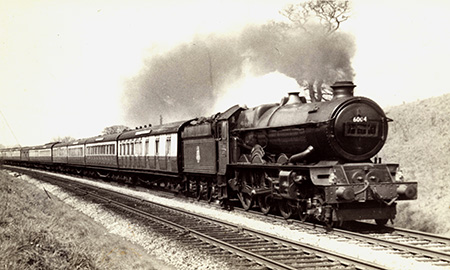
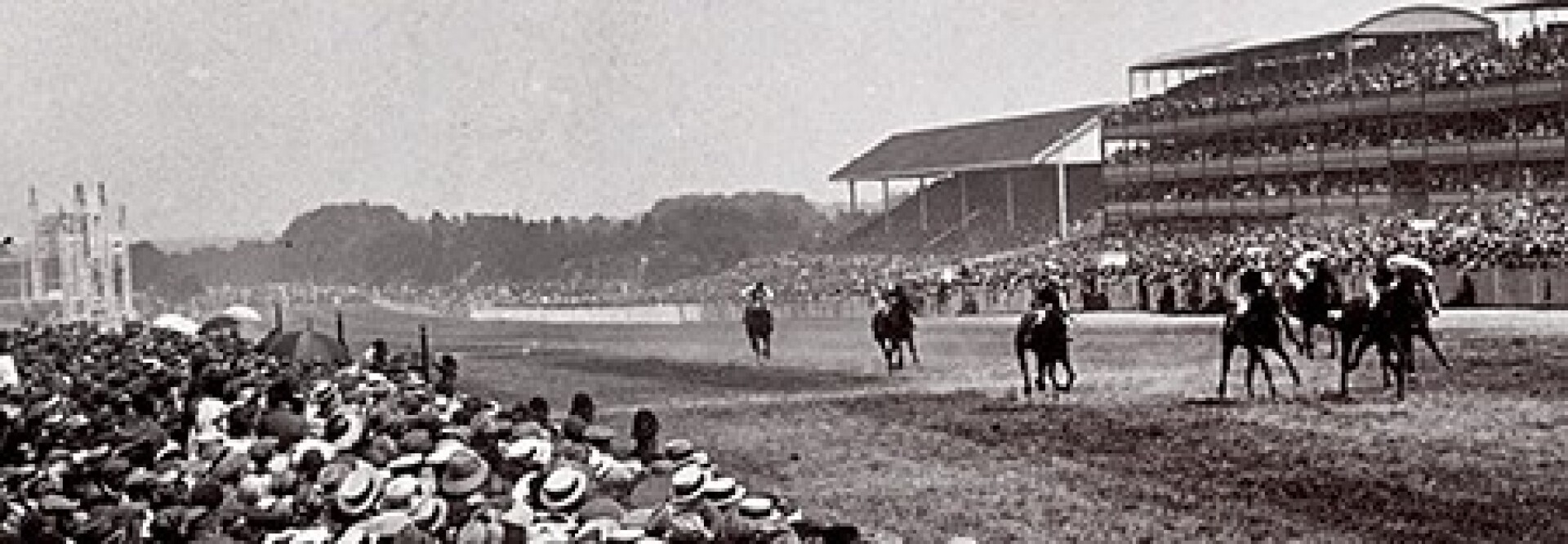
In 1859, following the arrival of the railway some three years earlier and the subsequent increase in numbers resulting from much easier and quicker access from London, Ascot Raecourse built an additional grandstand called The Iron Stand. In the following century however the Iron Stand took on. a different role. You were not allowed within the Royal enclosure if you were divorced but such divorcees could frequent the Iron Stand.
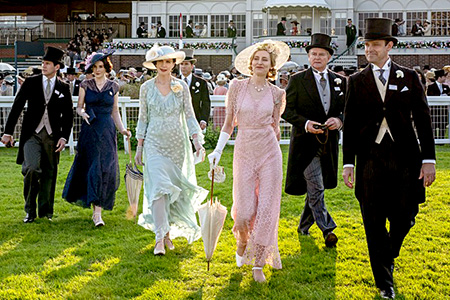
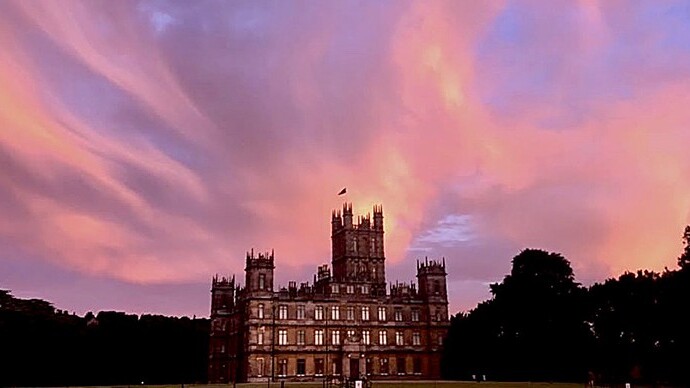
One of the themes of the third Downton Film was the disgrace of Lady Mary’s divorce and the subsequent social disapproval she had to contend with. She had already been ejected from a dance attended by members of the Royal family and then was barred from the Royal Enclsoure at Ascot and forced to stay on the side lines.
Who would think that there could be so much plot contrived around a grandstand? Of course, the phrase “grandstanding” is shorthand for behaving or speaking in a swaggering fashion in order to impress onlookers. It is gaining attention by taking a moral stance for one’s own benefit through making ostentatious displays and claims. The object is to gain favourable public perception and can be used to divert focus from the real issues. It is a performance and given you are high up on a grandstand, there may be a good sized if random audience to look up to you and listen to your rhetoric.
For most of us though a grandstand is simply a useful way of seating an audience to enjoy a large sporting event. Compared to original amphitheatres, modern grandstands are covered but they are all much the same shape.
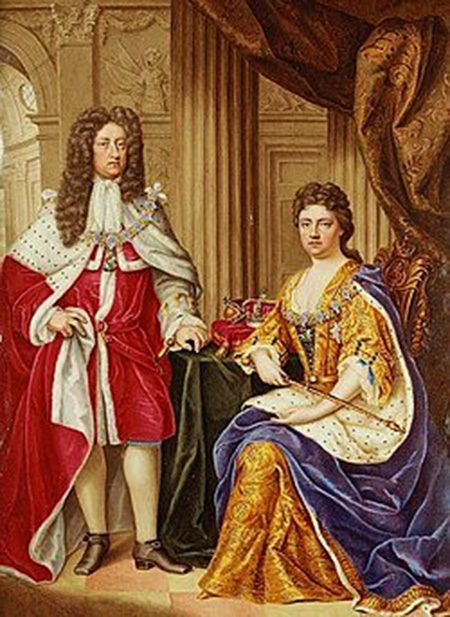
The idea of racing at Ascot began in 1711 during the reign of Queen Anne hence one of the races today is still named in her honour. It became increasingly popular so much so that in 1752 the Duke of Bedford noted that, when he arrived in London, “I could find no soul to dine or sup with’ - they were all at Ascot”.
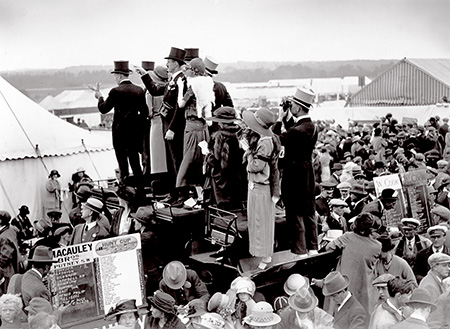
The first permanent structure at Ascot was a Royal Stand built in 1793 by George Slingsby (the reign of King George III) and had a capacity of 1,650 people. It was used for nearly fifty years before it was replaced in 1822 when King George IV commissioned a two-story Royal Box and a surrounding lawn area, which evolved into the exclusive Royal Enclosure. The first permanent public grandstand was built in 1839 and seated around 3,000 spectators.
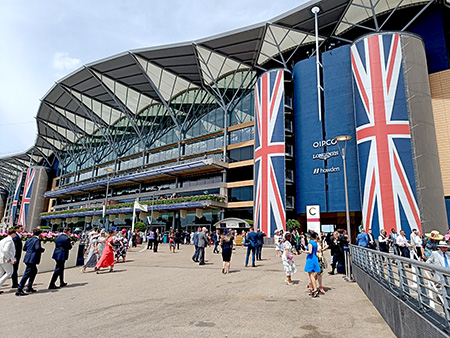
In 1900, the three existing grandstands were once again demolished and replaced, then again in the 1960’s, before the current grandstand was built some 20 years ago. From little over 1,000 spectators originally, this latest seven-story version was built to accommodate 80,000 spectators both sitting and standing, which explains today’s traffic challenges getting to the racecourse.
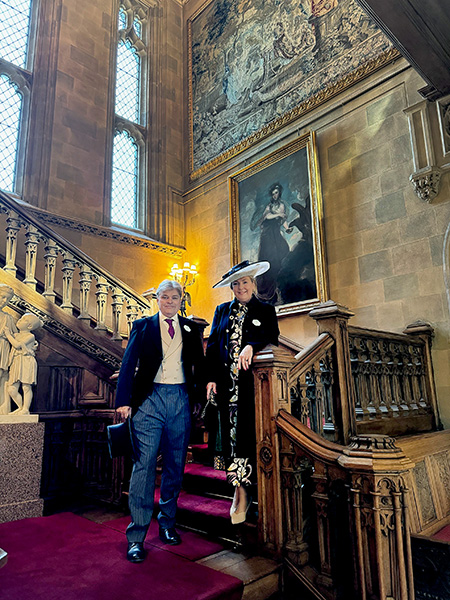
The so-called Iron Stand is still there in name and is now a club, but divorcees are welcome throughout the racing enclosures so Lady Mary would get along just fine. Such rules were all relaxed in the time of the late Queen in 1955.
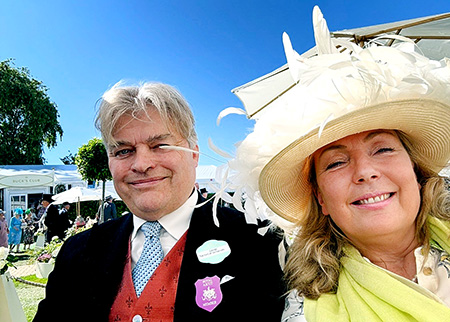
Whilst the courtesy and formal dress code of Royal Ascot remains, the Royal Enclosure welcomes guests – the limit probably set more by health and safety than social mores. Each guest receives a hand-written badge with their name, but woe betide if you lend it to someone else and get caught!
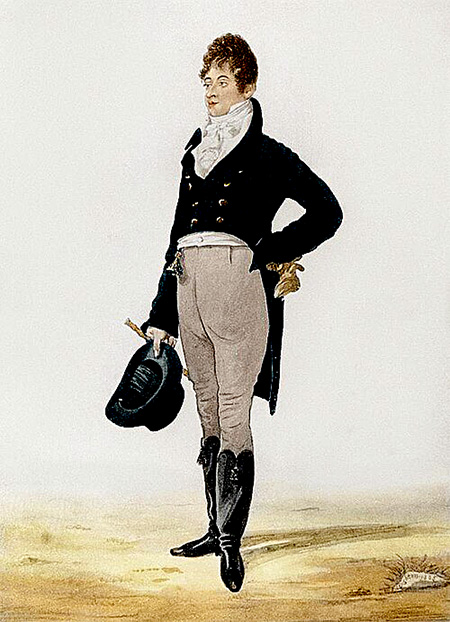
During Regency times the arbiter of taste and style was a man called Beau Brummel who was a close friend of the Prince Regent. He decreed that men of elegance should wear waisted black coats and white cravats with pantaloons to the Royal Meeting. This has now been translated into morning coats with a top hat for men whilst women wear formal daywear and a hat. Thus, the fictional cast of Downton Abbey were dressed in their finest for their sortie to Royal Ascot in the 1930’s – when the Grand Finale was set - and in many ways their costumes would be just as fashionable today.
24 Comments
Such an uplifting story in these days of stress
It is important to find the joy in things.
Lovely the pictures of the iron stand and you and lord Carnarvon have a wonderful weekend and lam fan of Downton Abbey and highcelere castle
You are very kind.
Looks like so much fun. You and Geogie are dressed to the nines.
Lady Carnarvon,
Thank you for the informative insight into one of the racing traditions in your country. We appreciate your time and energy. Please protect yourself from the sun and we will be thinking of you having grand adventures (along with long hours or work) going forward.
A wonderful story and I enjoyed the history of the Ascot races.
I'd love to understand where the phrase 'dressed to the nines' came from .... why not dressed to the eights, or sixes, etc ?!
In the 18th century,“to the nines,” which meant “perfectly” or “the highest standard”. There are also 9 muses.. in Anglo saxon
neówan, neón; meant new - so maybe that is also a relation?
Lady Carnarvon,
Thank you for the history of Ascot.
Did you or your husband pick any winners? :)
It is not yet over!!!
Lady Carnarvon,
I’m sure you and Lord Carnarvon have enjoyed watching many races at the Ascot. Seeing friends and royals must be fun!How many races has Highclere won, or come close? What a thrill to be a winner!
Martha
We may have a horse running... possibly
Lady Carnarvon,
Your interesting historical information on the Royal Ascot Races inspired me to research "the ascot tie." As I suspected, its origins hark back to the early races!
Here is what I discovered: "The Ascot tie evolved from the earlier cravat, popular in the early 19th century and linked to figures like Beau Brummell.
By the 1880s, a more relaxed, wide-ended version of the cravat became fashionable for formal daytime events, especially when worn with frock coats or morning coats.
This style became especially associated with the Royal Ascot, where it was widely worn—hence the name."
Now, I know. Thank you!
How interesting - thank you very much
Our local Elks lodge held parties while the
Kentucky Derby and Belmont stakes were being
shown. I bet $2.00 on a horse and won nothing.
But the delight for me is watching the races. Not
the money. I love your description of Ascot.
Lady Carnarvon, have a good week
The article was so interesting. A topic I would not have thought about. Thank you very much for enlightening me.
Thank you!
Thank you for all the wonderful history and traditions you share!
How very interesting thank you
I got to this a few days late.
Was just watching part of Day Two of Ascot!
I find all of your writings so filled with
Interesting information and insights.
I look forward to each of your articles,
learning new facts and enjoying the connections
you make.
Leave a Comment
- Christmas
- Community
- Dogs & Horses
- Egypt & Tutankhamun
- Entertaining
- Farm
- Filming
- Gardens
- History & Heritage
- Daily Life
- Royalty
- Cooking
- Interiors
- Heroes
- Architecture
- Cars
- Conservation
- Downton Abbey
- Events
- Gardens & Landscape
- Highclere Castle Gin
- History
- Planes
- Restoration
- Stories & Books
- Uncategorized
- Visitors
- Wildlife
That was a lovely article to read, Regards, Corinne
Beautifully written. Thanks.
Thank you