
The Emperor has no Clothes
The Emperor has no Clothes

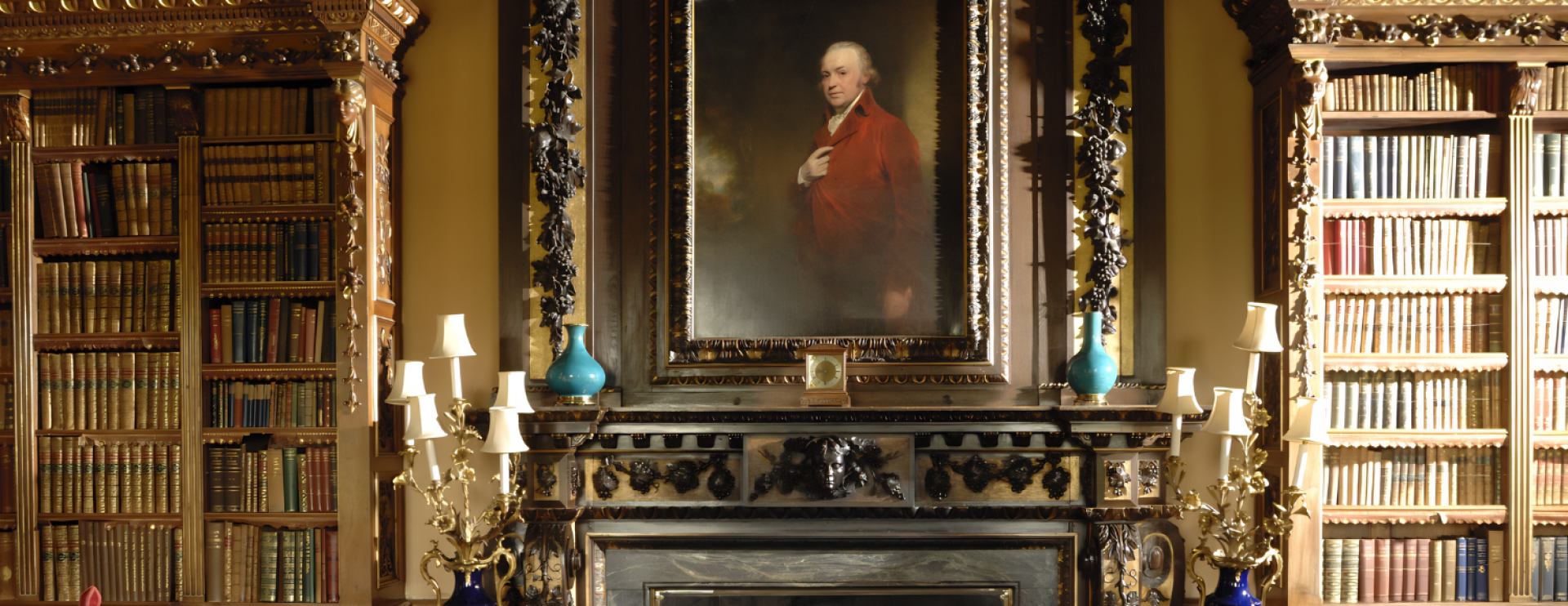
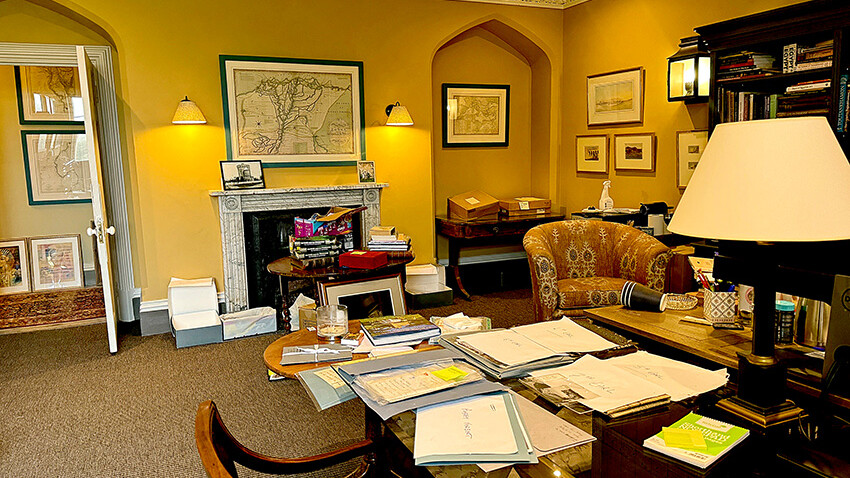
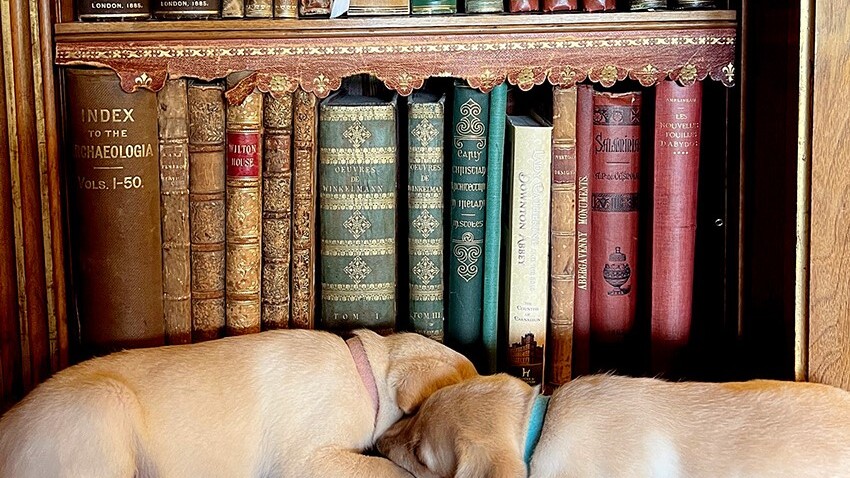
Looking along the library shelves at Highclere, I find myself dithering as to which book to pull out first. As well as books on history, famous people, explorers, buildings, art and culture, there are so many novels and stories.
In past centuries not everyone could or had been taught to read or write, thus stories were once nearly always read out loud. In contrast, these days reading is a solitary experience. We either read silently to ourselves or listen to stories on audible. Nevertheless, I still remember my father reading to us as children though it was usually something of his choice rather than ours: something from the Jungle Book or Aesop’s Fables or a story by Hans Christian Andersen. Happily, these books are still tucked away on various shelves. Leafing through them today, I am always struck by the quality of the beautifully coloured illustrations they all contain. That is of course what I look for first!!

Hans Christian Andersen (1805 –1875) was a Danish author. Originally from a poor background he managed to break into the literary world and wrote plays, novels, and poems but he is best remembered for his literary fairy tales, all 156 of them. They are all quite informal, relaxed and amusing, neither stilted nor overtly educational, though they by no means all end happily which is what we seem to prefer from our fairytales on the silver screen today.
His appearance was rather odd so success on the stage or dance or as a singer was likely to elude him. His dream was to be an opera singer, but he was described as “lanky and awkward, with a big nose, huge hands and feet with a poor crackly voice” so that was not to be, but it drove him to find other ways to be successful. In some ways, his story of the ugly duckling could be a metaphor for the author himself.
He was an excellent listener and had a great memory for plays and books. Part of his genius was that his fables had such imaginative strength and bowled along so smoothly that they appeared as if they were old folklore stories and legends passed down the centuries rather than new works.
The stories appeal not just to children but to the child in all of us. They share truths and how to see things unclouded by the conventions of adulthood. To my mind, one of the most amusing and embarrassing is the one titled “The Emperor has no Clothes” which is the fable of the ultimate con artists.
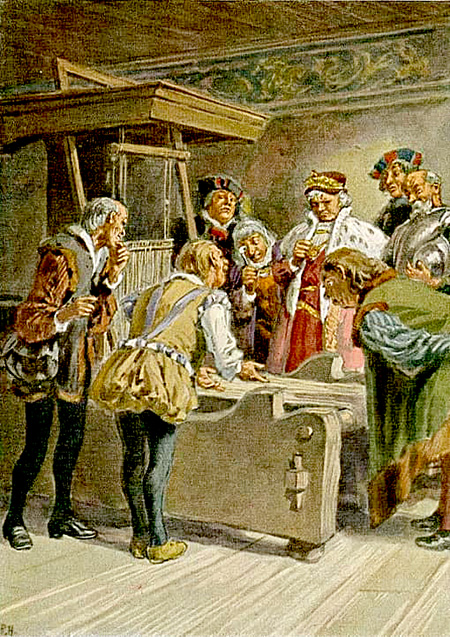
“One day, two fellows calling themselves weavers came to town. They said that they knew how to weave cloth of the most beautiful colours and patterns. The clothes made from this wonderful cloth would be invisible to everyone who was unfit for the job he held, or who was very simple in character.”
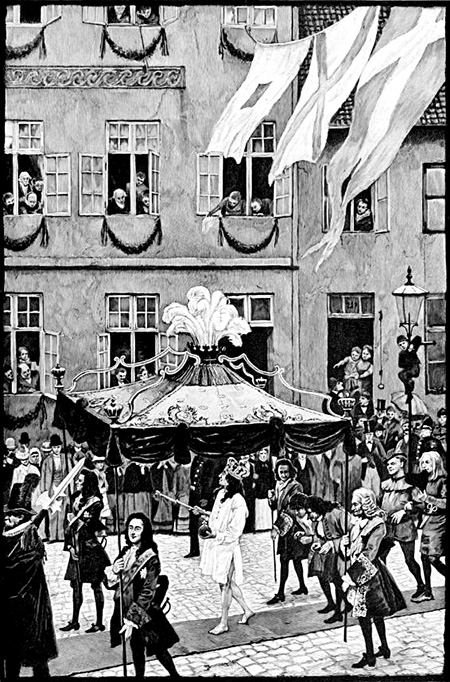
Excited by such a prospect, the king gave them money and the finest silks and gold thread. Showered with every luxury, the weavers span out their stay pretending to be very busy. The courtiers would arrive in turn to see the wonderful garments and, fearing to be seen as inadequate and unworthy of their positions, would admire them and report back to the Emperor about how marvellous they were. Eventually, the Emperor insisted on having his new clothes and was ceremoniously dressed in his new “garments” before parading in front of his subjects. It took a child to shout the truth: “But the Emperor has nothing at all on”, exposing the illusion and the weavers for the charlatans that they were.

It is a great story about a collective delusion - believing in something because everyone else does as well. Today, we face a barrage of fakes, often due to AI manipulation or unscrupulous reporting by those who present only the facts to suit their own purpose and it is sometimes almost impossible to tell what is real and what isn’t. You can no longer wholly trust what you see or hear in the news and certainly not what you see in social media. Scandals and lawsuits over deep fakes are becoming ever more prevalent.

I have the same fears about the “invisible” so called currencies. For me, the various forms of crypto currencies whirl around computer trails like white puffs from an airplane in the sky. They lack the stability of a value backed currency, thus they are not a currency but essentially a gamble on thin air. Furthermore, all these platforms absorb energy resources equivalent to the electrical use of a country such as the Netherlands and needs masses of water all of which perhaps could be put to better use.
Will this be the South Sea Bubble or Tulip Mania of our age? Only time will tell. However, if you ask a child whether they would prefer a £10 note or non-fungible crypto token or code which they cannot see, I know what they would answer.
48 Comments
Interesting that Andersen's physical appearance did not reflect the genius within.
How many of his stories had a history and how many did he create from his own imagination?
Great post, thank you. I'll take the cash, please.
Agreed - wonderful post, and right there with you and Lady Carnarvon - cash! :-)
Love this!:)
🥰🥰🥰
Lady Carnarvon,
What an informative post you have for us today. I enjoyed reading about Mr. Andersen, who does weave such interesting stories. I totally agree with you that the crypto currencies are left to those who see only opportunity with no downside. I especially like the concluding line which neatly wraps up your lesson for the week. Thank you for taking your valuable time to bring a bit of learning into our week.
Well done! As someone who does invest time with experts on disinformation and particularly Crypto,
it’s correct that it is a nothingness, made in the form of Ponzi. Recalling an episode of Downton Abbey,
where Lord Grantham is feeling, particularly desperate to correct his misfortune he declares he’s heard about this chap called Ponzi
who has an excellent return on investments. It’s a moment where as an audience member you wince- yet relating to today, it is that desperation that drives people.
I hope we will be the Phoenix, rising from the ashes, made better discerners of what’s important from these very challenging times. May ee become the kind of people who handle our desperation in more productive ways..
You are a woman after my own heart when it comes to crypto and data centers! There are several centers in South Carolina and many more are looking to
come to our state. Colleton County, where one center is looking to locate, right in the middle of the ACE Basin, a wildlife refuge, has voted to have a six
month moratorium with the possibility of another six month extension.
Yes, it is horrifying that they choose the areas where the most damage is to be made to nature and wildlife. They are doing the same here in Arkansas. Lady Carnavon is correct: it is as clouds in the sky as to monetary security.
Here in Arizona, where water is a worshipped resource, local governments are selling out, beating each other to get to
the water usurping data centers first only to double residents' rates in the end.
Thus the way to madness
Nice and interesting post, as always. Thanks a lot!
Always an interesting read thank you ,
🙏🙏🙏
Excellent! I love the old illustrators of the books published at the turn of the last century. They've become my favorite artists. Great analogy.
Thanks for the your blogs. I look forward to them every Monday. They make Mondays a wee bit better.
Thank you for your kind words Donna, I do love old illustrations too !!
I always enjoy your historical posts and have learned so much by reading them. I agree with your take on the new "invisible" currency...will we face new charlatans in the future? Scary thought. We face the whole data center surge in our area and it terrifies me as to the amount of water and electricity they need to maintain. Is this really progress. Again thanks for your great blogs.
Excellent! Agree 100%. Thank you!
Thank you
Very interesting and insightful post as always, Lady Carnarvon. I would like to add that it is widely suspected that Hans Christian Andersen had Marfan syndrome, a genetic connective tissue disorder. Historians and medical researchers have noted that his physical appearance and health struggles align with the characteristics of this condition, which affects the body's connective tissue in a deleterious way. Other famous individuals who may have suffered this disability include Charles de Gaulle, Abraham Lincoln, and it used to be thought, possibly, Tutankhamun. I read that at around only 18 years of age the Egyptian king walked with a cane, and over 130 walking sticks were found in his tomb. However, more recent DNA studies suggest it was more likely to be a bone disease that he suffered from.
Lovely post!
Thank you Lady Carnarvon.
Yes, I agree with you! Why are so many people convinced that these alternate currencies are a good investment?
I fail to see that they are valid choices. As to reading, I have always loved to read and
feel that it broadens one's horizons. I have been lucky enough to visit some of the places that I
read about when I was young and this has enriched my life so much. Thank you for this
your insights, Lady Carnavon!
Fantastic post Lady Carnarvon, Hans Christian Andersen was one of my own personal favourite authors of my childhood and I absolutely loved all of his stories. I have a picture that I was given by my mother of him at his writing desk and all around the edge were lovely little paintings of all his Literary works as he is imagining them, before they are put on paper.
How lovely Thus the way to madness
There is a 12-minute children's opera setting of The Emperor's New Clothes by the Pulitzer Prize-winning American composer
Douglas Moore, libretto by Raymond Abrashkin. It is available online. Released in 1949 by the Young People's Records 1007
and 1008. It was re-released in 1953on the Children's Record Guild label. The music is excellent, the performance is top-notch,
with full orchestra. I belonged to the club for several years, receiving a 78rpm record set every month. Whenever a word
prompt from the story comes up, my brothers and I are likely to start singing that section of the opera! Thank you for sharing
information about this wonderful, classic children's music. Here's a link to the original recording: https://bit.ly/4tpczWt
my mental program for the week!
Your posts are always so well researched and informative, always of interest to read. Here in the US I have used this very analogy many times regarding our current President. One can only hope enough people arrive at the same conclusion and save us from this disturbing series of events that seem to occur continuously.
It’s scary to not know who or what to trust in the news. It sometimes feels like we are on our own to determine the real facts. Reading in your library would be like going back in time, such a privilege!
I beautiful read. Crypto currency is only for fools to invest in. Try going into store to buy something and telling them you are paying with crypto currency! Imagine telling you great grandchildren their birthday gift is $50.00 in crypto currency they would like you very much after that. Give me hard currency always!
A favourite fairy tale as a child and one that has been resonating lately for some reason 🤔
Agree! Everything is becoming ether and slights of hand, and yet destruction has never been more obvious.
AI terrifies me and not just with its heavy water and environmental cost. Its potential to escape control is interesting to say the least.
So back to nature I go. Everything is stunning here in our so called Queensland Autumn. Still warm and no winter clothes yet!
Highclere must be spectacular too ❤️
How right you are, Lady Carnarvon! I too have been reminded of the tale about the emperor’s clothes in this age, when discerning the truth becomes easily muddled.
Wonderful post and very relevant. Andersen’s stories are beautiful and timeless. Thank you for this wonderful post
Something I love about children is their honesty.
And "The Emperor's New Clothes" captures that trait perfectly!
Thank you for reminding me about the story.
Maybe if children ruled the world--or if adults gave them their due--we wouldn't have so many "fakes."
Every Tuesday morning I look forward to your posts, so informative and on subjects that one finds so interesting, thank you!
very kind
Dear Lady Carnarvon,
Interesting story on Mr. Andersen.
I think he was very amusing. I also think these
Crypto coins, most people do not know a whole lot.
Not to mention the disappearance of the
Penny in the USA. . Which I already miss.
I used to go to my grandfather's summer home where he had a real library and curl up with a book from the many leather bond classics that he had.
Thankyou for your lovely story of Hans Christian Anderson. The parable of The Emperor with No Clothes has stayed with me my entire life. I appreciate your beautiful writing.
Lady Carnarvon,
If several 8 year-olds could be asked about how to deal with our world’s problems, I’m sure they would have some very true answers. Fortunately they are still honest.
Once again, you have reminded us of our lack of clarity. Thank you.
Martha
Wonderful post as always, thank you for bringing a little bit of sunshine into our manic lives.
Please continue Lady Carnarvon it’s kind of you to take the time and find such interesting things to tell.
🤗🙏
I always enjoy your posts and insights. We visit Highclare Castle today. What a marvelous place. Your tour guide was wonderful and her stories of filming Downton were so fun. Thank you for talking with us. It was the highlight of our trip
Lovely to see you
Excellent thoughts. I really did enjoy Anderson’s writings as a child.
As far as crypto goes and being an active and avid investor, crypto is at best a long shot gamble. I know two people who have lost almost everything to crypto schemes / scams.
On another note it was nice to meet you on Saturday. Our stay at the Grotto Lodge was wonderful and a great way to spend our 30th Wedding Anniversary! Luis and Sam went out of their way to make us feel welcomed.
David & Cynthia Carr
I always loved his stories. As for the Emperor with no c
No clothes, just look at British politics for the last t
Twenty four hours. And don't get me started in AI
and crypto currency either. Thank you, Lady Carnarvon
for your wisdom, common sense and lovely writing
Have a good week
Thank you - you too
Thank you for this vlog. I grew up on Hans Christian Andersen tales long before Grimm's, and one of my very favorites is "The Angel."
I have fond memories of my grandmother reading the story to me, and even now, it's a tear-jerker. Andersen has been so influential on our society, yet
rarely gets the credit he deserved in life; Disney has certainly plumbed his tales for their benefit, yet most children (or adults) know the source material of some
of their best-known films & shorts.
Loved, loved the Emperor with No Clothes as a child. Doesn't it describe so much today?! Wow.
Especially the "Group Think" of so many sheep?!
Thank you for the research & reminder & comments. Love your writing style.
Good afternoon Lady Carnarvon - Always a delight to read these.
Dear Lady Carnarvon:
Thank you for this Monday's blog and for sharing the background on Hans Christian Andersen.
I look forward to receiving these e-mails and always learn something new from the short stories you write for your readership.
Perpetua Crawford
Leave a Comment

- Christmas
- Community
- Dogs & Horses
- Egypt & Tutankhamun
- Entertaining
- Farm
- Filming
- Gardens
- History & Heritage
- Daily Life
- Royalty
- Cooking
- Interiors
- Heroes
- Architecture
- Cars
- Conservation
- Downton Abbey
- Events
- Gardens & Landscape
- Highclere Castle Gin
- History
- Planes
- Restoration
- Stories & Books
- Uncategorized
- Visitors
- Wildlife
Lovely the pictures of the emperors has no Clothers and did you and lord Carnarvon have a wonderful weekend and lam fan of Downton Abbey and highcelere castle
Thank you Karen, I hope you had a lovely weekend.